DIGITAL WEBSITE & SUBSCRIPTIONS
Your website should not be a second business.
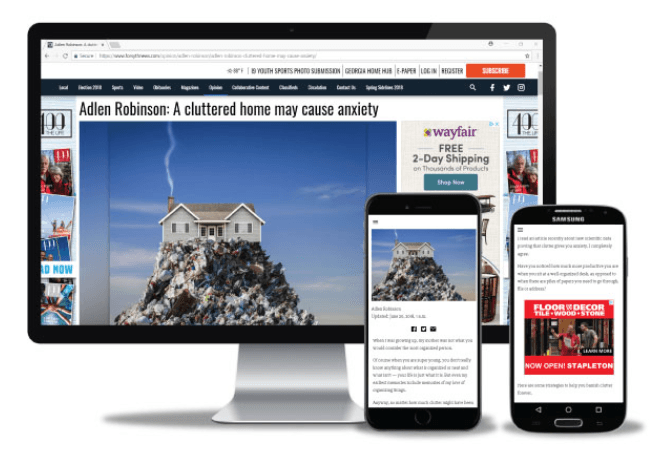
Foundry — the CMS we partner with, resell and support — runs your website, and it is wired into the AccountScout that runs your print operation. An ad sold once appears in both places, and the two sides of your business finally report as one.
THE PROBLEM
The website runs like a separate business.
There is the paper, which has a rate card, a production process, and a billing system. And there is the website, which has a separate vendor, a separate login, a separate invoice, and a separate person who knows how to update it.
Selling across both is a manual act of coordination. A rep sells a print-and-digital package, then somebody enters the print side in one system and the digital side in another. Nobody can produce a single report showing what an advertiser spent with the publication in total, because no system holds both halves.
And the website vendor's incentives are not yours. They are building for a thousand generic small businesses, so the things specific to a newspaper — obituaries, legal notices, classifieds, e-editions, the archive — are always either an awkward plugin or a custom project.
THE NEWSROOM SIDE
A story is built from blocks, not from a plugin.
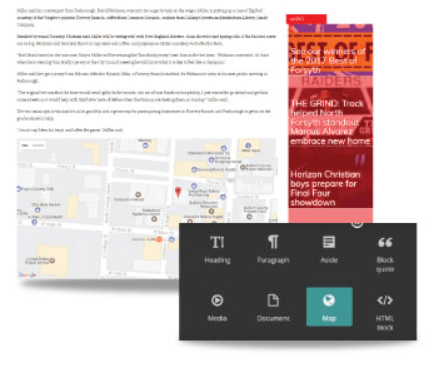
The editor handles what a newsroom actually publishes — headings, pull quotes, media, documents, maps — so an obituary, a legal notice, and a photo essay are ordinary work rather than three separate workarounds.
- Sections, notices, classifieds, and the archive treated as publishing
- The site is wired into the system that runs the print operation, so an ad sells once
- Digital orders age, invoice, and collect through AccountScout alongside print
THE READER SIDE
Who turned up, and where they came from.
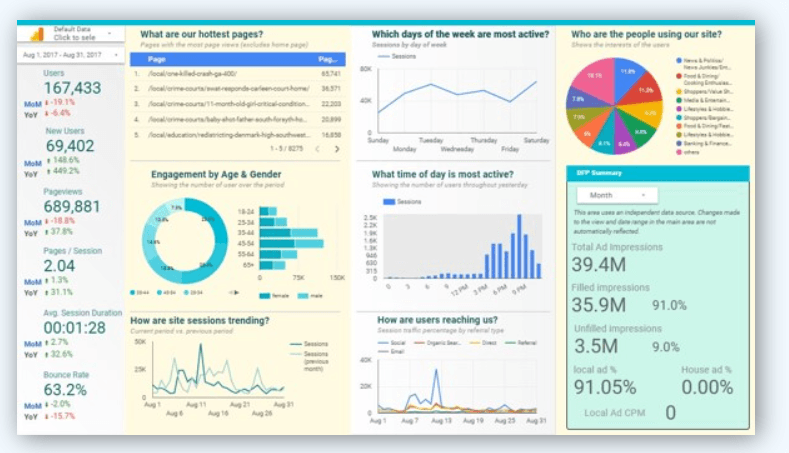
Audience reporting sits with the site rather than behind a separate analytics login, so the reader half of the business can be discussed with the same kind of evidence as the ad half.
- Users, pageviews, pages per session, and bounce rate on one dashboard
- Engagement by day of week and time of day, for deciding when things publish
- Referral source, so you can see what is actually bringing people in
WHAT CHANGES
Both halves of the business, finally connected.
- One vendor relationship behind both the printed product and the website
- An ad sold once can run in print and online without double entry
- Digital revenue bills through the same receivables system as print
- Total advertiser spend across print and digital is one report
- Classifieds, notices, and the archive are handled as publishing, not as generic web content
HOW IT WORKS
Sold once, published twice, billed together.
The order originates in the same system that bills it, which is what removes the double entry between the paper and the site.
- 1
Sold once, runs in both places
The order originates in the same system that bills it, so a print-and-digital buy is one entry rather than two that have to be kept in agreement.
- 2
The website is publishing software
Foundry is built for the things newspapers actually publish — sections, notices, classifieds, archives — rather than adapted from a general-purpose website builder.
- 3
Classifieds run online and in print together
ClassifiedScout connects the printed classified section to the online one, so a listing does not get entered twice or drift between the two.
- 4
Digital billing is just billing
Digital orders age, invoice, and collect through AccountScout alongside everything else, on the same statements.
- 5
Reporting covers the whole account
What an advertiser spent with the publication — not what they spent with the paper and separately with the website.
PROOF
"Mid-Atlantic Media uses Fake Brains' AccountScout for its portfolio of publications. We were effectively able to consolidate our sales, layout, receivables and CRM functions into AccountScout affordably. It's a big deal considering we're running more than a dozen publication titles and over 50 employees through it."
Foundry has a defined scope, and we would rather be precise about where it stops than let you discover the boundary after signing. The product page states it plainly.
- One report
- Total advertiser spend across print and digital, rather than two systems to add up.
- Since 1991
- Built in-house in Colorado for newspaper and media publishers.
WHERE IT CONNECTS
Digital is another place the same order runs.
Self-serve classified ad software
Print and online classifieds from one entry, without re-keying the listing.
ExploreNewspaper advertising software
Digital revenue billed with everything else, on the same statement.
ExploreAd sales CRM
Sell print and digital as one conversation, and one order.
ExploreCOMMON QUESTIONS
Questions publishers ask about digital publishing.
The rest of the workflow
See It In Action
Show us both sides of your operation
The paper and the website, and everywhere someone has to enter the same thing twice. We will show you what connects — and what doesn't.